Custom Stamping and Sheet Metal RFQ Checklist
For a custom stamping or sheet metal quotation, start with the part you need, the latest drawing or sample reference, material and thickness, quantity, finish, and the features that matter in assembly. Add any inspection, packaging and requested delivery requirements you already know. You do not need to invent missing specifications before making an enquiry: identify what is undecided and explain the function or constraint that needs review.
LAMBOOR accepts customer drawings, samples and project requirements for custom metal component evaluation. The checklist below helps buyers organise that information; it is not a statement that every process, material, finish or test is available for every design.
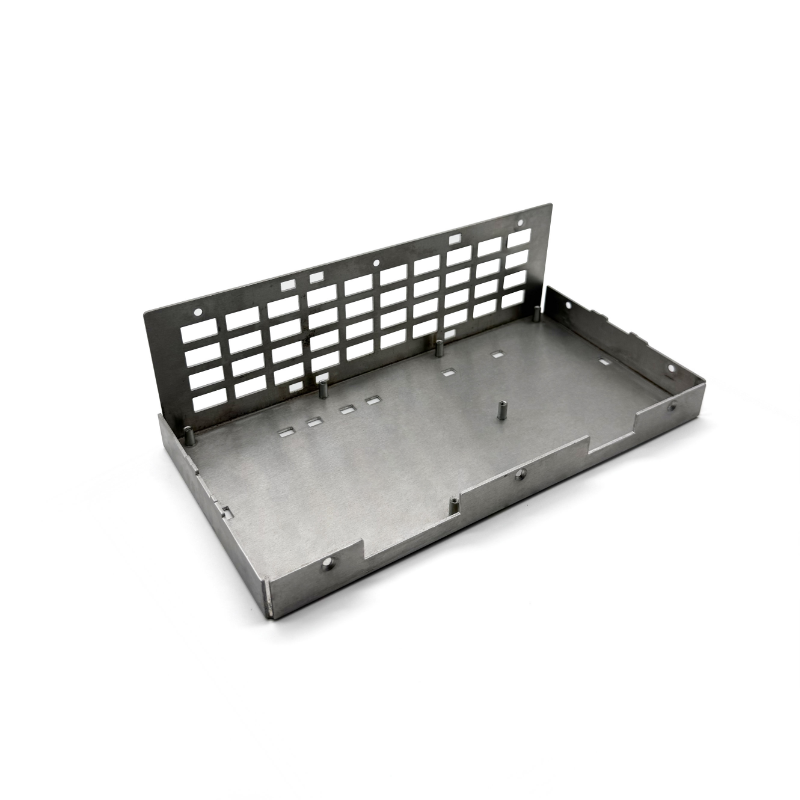
Which part should the RFQ identify?
Give each component a part name or reference. If you are enquiring about a gallery example, identify the photograph and the specific housing, bracket or trim you mean. For an assembly, separate the components you want quoted from fasteners or purchased items that are outside the scope.
For example, the stamped and formed component gallery includes a narrow SUS304 housing documented with punching and a separate SGCC folded housing documented with stamping. Those facts belong to the identified components; they do not establish the material of every item in an assembly.
What drawing and revision information should you send?
Send the current dimensioned drawing and any corresponding model or sample reference you have. Identify the part number, revision and units, and say whether the drawing describes the finished part or an earlier manufacturing stage. Mark obsolete files clearly so they cannot be mistaken for the version to quote.
If a drawing, model and sample differ, highlight the difference and state which requirement should govern. Ask for that interpretation to be confirmed before production. A photograph can identify an example, but it should not be used to guess material grade, hidden features or dimensional tolerances.
How should material, thickness and finish be specified?
State the material grade and sheet thickness already specified for the selected component, including any existing material standard or condition requirement. If material selection is open, describe the application and the properties you need reviewed rather than assigning a grade from appearance.
Keep finish requirements attached to the correct component. Provide an existing finish specification or appearance reference, and identify the surfaces concerned, any areas that must remain untreated, and whether critical dimensions are specified before or after finishing. Discuss the applicable treatment with the supplier; a finish shown on one example is not automatically suitable or offered for another.
The two featured AL5052 stamped housing examples are documented without additional surface treatment. Their material and finish description does not cover every mesh, frame or fastener shown elsewhere in that gallery, and it does not set the specification for your new part.
Which assembly details matter beyond overall dimensions?
Identify the mounting holes, slots, openings, bend geometry and mating interfaces that control how the component fits. Where available, include the relevant mating-part drawing or an annotated assembly view. Mark the critical dimensions and their permitted tolerances rather than asking for an undefined “high-precision” part.
Describe any required orientation, contact surface, clearance or restricted area. Include existing requirements for burrs, edges or visible surfaces when they affect assembly or handling. If a fit requirement is not yet defined, explain what must connect or move so the missing requirement can be discussed.
What quantity and packaging information helps define the quote?
Separate the quantity needed for initial samples from the quantity for the proposed production order. If repeat demand is known, identify it as an estimate. For multiple components, give the quantity per component and distinguish individual pieces from complete sets.
Describe any known requirements for individual protection, grouping, labels or carton identification. State the requested delivery location and date, identifying them as your project requirements. These inputs support review; they do not establish a supplier’s minimum order, production lead time or confirmed delivery commitment.
How should inspection and acceptance requirements be written?
Identify the drawing revision, critical characteristics and acceptance limits. List the dimensional, visual, material, finish or performance checks your project actually requires, together with any specified methods, test conditions and records.
Agree the sampling plan or contractually specified full checks, report requirements, and how nonconforming parts will be reviewed and handled before release. If you do not already have a complete inspection plan, state the known functional and acceptance needs for discussion. Do not assume every listed test applies to every part, or that a test has been included simply because it appears in a general manufacturing guide.
What should be agreed about samples before production approval?
If sample approval is needed, define what the sample review will cover: dimensions, fit, appearance, function or a specified combination. Identify the drawing revision, sample reference and any recorded deviations associated with the approval.
Agree who will approve the sample, what evidence is needed and which requirements must be resolved before production proceeds. Ask for the proposed sample scope, cost and timing to be confirmed for the project; do not assume samples are free or that a sample approval covers unspecified requirements.
Sample approval records the reviewed sample and the agreed characteristics. It does not replace the agreed acceptance checks for subsequent production lots.
What should you check before sending the RFQ?
- Each component, drawing and sample reference identifies the same part and revision.
- Material, thickness and finish requirements are assigned to the correct component.
- Quantities distinguish samples, production pieces and sets.
- Assembly-critical features and known acceptance requirements are identified.
- Packaging, requested delivery and sample approval needs are included where applicable.
- Open decisions are listed as questions rather than silently filled with assumptions.
FAQ
What if the drawing changes after a quotation?
Send the new revision with a short description of the changes and ask for the quotation to be reconfirmed against it. Identify any affected material, tooling, quantity, finish or inspection requirements. Do not assume an earlier price, sample approval or delivery estimate applies to the revised design.
How can I compare quotations that use different assumptions?
Ask each supplier to identify the drawing revision and quantities quoted, what is included for tooling, samples, finishing, inspection records and packaging, and any exclusions or proposed alternatives. Resolve those differences before comparing the total price. A lower figure does not show whether both offers cover the same component and acceptance requirements.
Prepare the information you already have and identify the decisions that still need review. A clear RFQ gives the buyer and supplier a shared starting point for confirming the component, quotation scope and acceptance requirements.