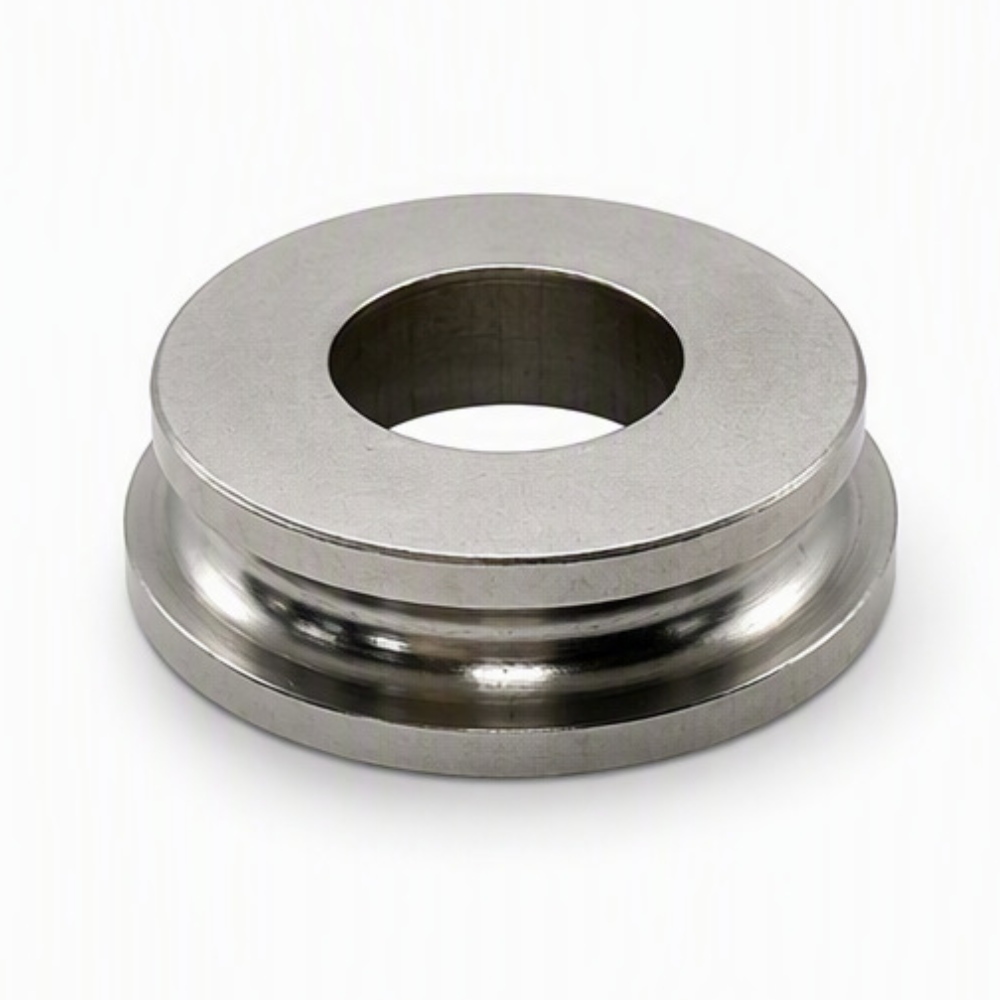
Custom CNC Turned Part with Bore and Circumferential Groove
- Part No :
-
- Product Type: Custom grooved turned part
- Manufacturing Process: CNC turning
- Structure: Central through bore, two circular rims and a concave circumferential groove
- Material Options: Aluminum alloys, stainless steel, carbon or alloy steel, and brass according to application requirements
- Dimensions: Bore, outside diameter, overall width and rim thickness customized to drawing
- Groove Profile: Radius, depth, width and transitions according to drawing requirements
- Fits and Tolerances: Drawing-defined datums, bore fit, runout and surface roughness
- Surface Finish Options: As machined or material-compatible finishing; allowance and masking for precision surfaces
- Supply: Non-standard, made to order
- Quotation Inputs: Drawing or CAD model, material, finish, quantity and inspection requirements
- Inquiry now
Detailed description
Custom CNC Turned Part with a Grooved Ring Profile
This custom CNC turned part has a central through bore, two circular rims and a concave groove around its circumference. The ring-shaped geometry is manufactured to the customer’s drawing rather than supplied as a fixed catalog size. Bore diameter, overall width, rim thickness and the curved groove section can be specified together to suit the intended assembly.
Typical CNC Turning Sequence
A typical route starts with preparing the selected metal blank, facing a reference surface and machining the bore and outside diameters. The circumferential groove is then turned to the specified section. A subsequent setup can finish the opposite face and overall width. Deburring, cleaning, any agreed surface treatment and final inspection follow. The actual sequence depends on the drawing, material and workholding requirements.
Control of the Bore, Groove and Rims
The bore axis and groove position should share a clear datum scheme. Where the assembly requires it, the drawing should define radial runout of the grooved surface and face runout of the rims relative to that axis. Groove depth alone does not describe a curved section: radius, width and transitions also affect the resulting profile.
Workholding should avoid distorting the annular body or marking a finished bore. Removing material from the groove reduces the section between the bore and outside surface, so the remaining wall and rim thickness need review. Edge breaks must remove burrs without rounding a controlled profile or changing a seating surface.
Material and Surface Finish Options
Material selection depends on the service environment, weight, strength, wear and cost requirements. Aluminum alloys may suit weight-sensitive designs; stainless steel may be selected for corrosion resistance; carbon or alloy steel may suit strength and wear requirements; and brass may suit specific machining or assembly needs. The grade and any heat-treatment requirements belong on the drawing.
As-machined surfaces can be retained where acceptable. Aluminum finishing options include anodizing or bead blasting; stainless steel options include passivation; steel options include zinc or electroless nickel plating; and brass options include polishing or nickel plating. Finishes must be matched to the selected material. Coating buildup can change both the bore fit and groove section, so specify dimensional allowances or masking on controlled surfaces. Plating high-strength steel also requires review of hydrogen-embrittlement controls.
Drawing Definition and Inspection
Define the bore, rim diameters, total width, groove section, datum faces and required surface roughness. Identify which characteristics are functional and specify acceptance criteria rather than applying the same tight tolerance everywhere. Inspection requirements can cover bore size, axial groove position, rim thickness, profile and drawing-specified runout. Agree the measurement reference and any report or first-article requirements before production.
FAQ
Can this grooved part be used with a belt or cable?
Compatibility must be established from the assembly requirements. A concave groove is not, by itself, a belt or cable specification. Provide the mating profile, contact conditions, operating loads and any applicable design requirements so the groove geometry and material can be reviewed before ordering.
Does the central bore include a bearing?
The bore is a machined feature, not a specified bearing assembly. If it is intended to receive a bearing, shaft or other insert, specify the mating component, fit and retention method on the drawing. These requirements determine the bore dimensions and any additional assembly features.
Can an existing sample be used to define the groove?
A sample can support a dimensional review, but it does not replace an agreed specification. Wear, coatings and edge damage can alter the original groove section. Supply any available drawing and identify the surfaces that control assembly fit; agree the profile definition and acceptance criteria before manufacturing a replacement.
Request a Drawing-Based Quotation
Send LAMBOOR the 2D drawing or CAD model, material grade, finish, required quantity and inspection needs. Include a section through the groove and details of the mating assembly where relevant. These inputs allow the custom CNC turned part to be reviewed as a defined component rather than quoted from appearance alone.