
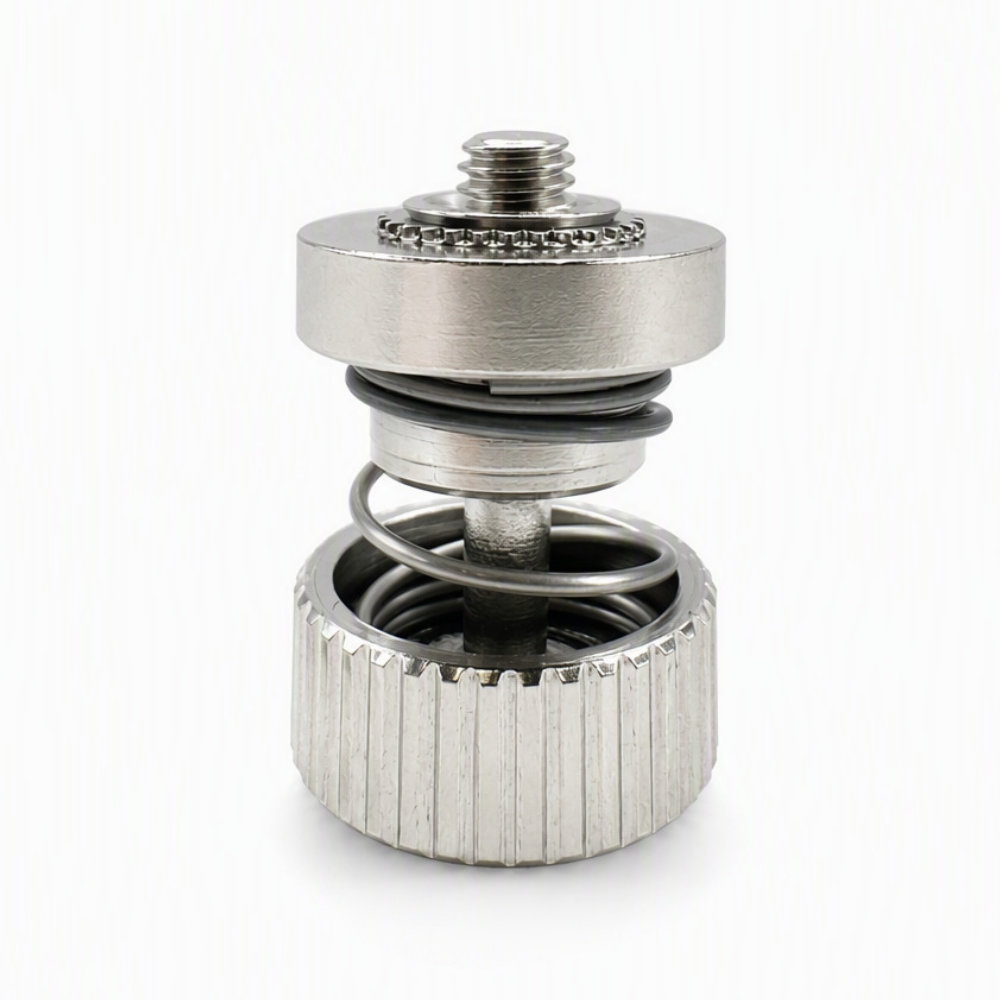
PF50-M3-1 Captive Panel Screw with Knurled Knob
- Part No : PF50-M3-1
-
- Part Number: PF50-M3-1
- Product Type: Spring-loaded self-clinching captive panel screw
- Thread: M3 × 0.5
- Shank Code: 1
- Head: Knurled knob, Phillips drive
- Retainer: Nickel-plated steel
- Spring: Stainless steel
- Minimum Sheet Thickness: 0.8 mm
- Mounting Hole: 5.5 mm (+0.08 mm)
- Minimum Edge Distance: 6.6 mm
- Inquiry now
Detailed description
Knurled-knob captive screw for panel access
The PF50-M3-1 captive panel screw combines an M3 × 0.5 screw, a knurled knob and a spring-loaded captive assembly. This self-clinching standard fastener uses the PF50 configuration and shank code 1. The catalog identifies a Phillips-drive design, a nickel-plated steel retainer and a stainless-steel spring.
The knurled knob provides a gripping surface, while the Phillips recess provides screwdriver access. The spring-loaded arrangement separates screw movement from the fixed panel retainer. Check the required access and mating-thread engagement in the complete assembly before choosing the fastener.
PF50-M3-1 catalog specifications
| Parameter | Catalog value |
|---|---|
| Thread | M3 × 0.5 |
| Shank code | 1 |
| A, maximum | 0.77 mm |
| Minimum sheet thickness | 0.8 mm |
| Mounting hole diameter | 5.5 mm (+0.08 mm) |
| C, maximum | 5.48 mm |
| E | 10.3 +0.4/−0.13 mm |
| G | 7.37 ±0.64 mm |
| H | 5.26 ±0.2 mm |
| P | 1.52 ±0.64 mm |
| T1, maximum | 8.64 mm |
| T2, nominal | 13.21 mm |
| Minimum hole-center-to-edge distance | 6.6 mm |
Source: LAMBOOR Standard Fasteners Catalog V0.1, printed page 08 (PDF page 13). Lettered dimensions follow the catalog drawing. Measured catalog values are reference values; the actual product governs.
Panel preparation and ordering checks
Review mounting-hole size and its stated tolerance, minimum sheet thickness and edge distance together. Allow space for the knob and the screw in its released position. Specify installation and acceptance requirements for the actual sheet material; dimensional fit alone does not define installation force or tightening torque.
Frequently asked questions
Can code 0 be substituted for PF50-M3-1?
Not without reviewing the assembly. The catalog changes G and P between codes 0 and 1. A common M3 thread does not ensure the same screw projection or engagement with the mating component.
What distinguishes PF50 from PF60 in this catalog?
PF50 is the knurled-knob version; PF60 is the smooth-knob version. State the full PF50-M3-1 number when the gripping surface shown here is required, and check the drawing before substituting another family.
Does the nickel-plated steel specification apply to every component?
No. The catalog caption identifies the retainer as nickel-plated steel and the spring as stainless steel. It should not be read as a material or plating specification for every component in the assembly.
Request PF50-M3-1
For a quotation, provide the full part number, quantity, sheet material and thickness, and relevant drawings. Include appearance, inspection and packaging requirements where they affect the order.