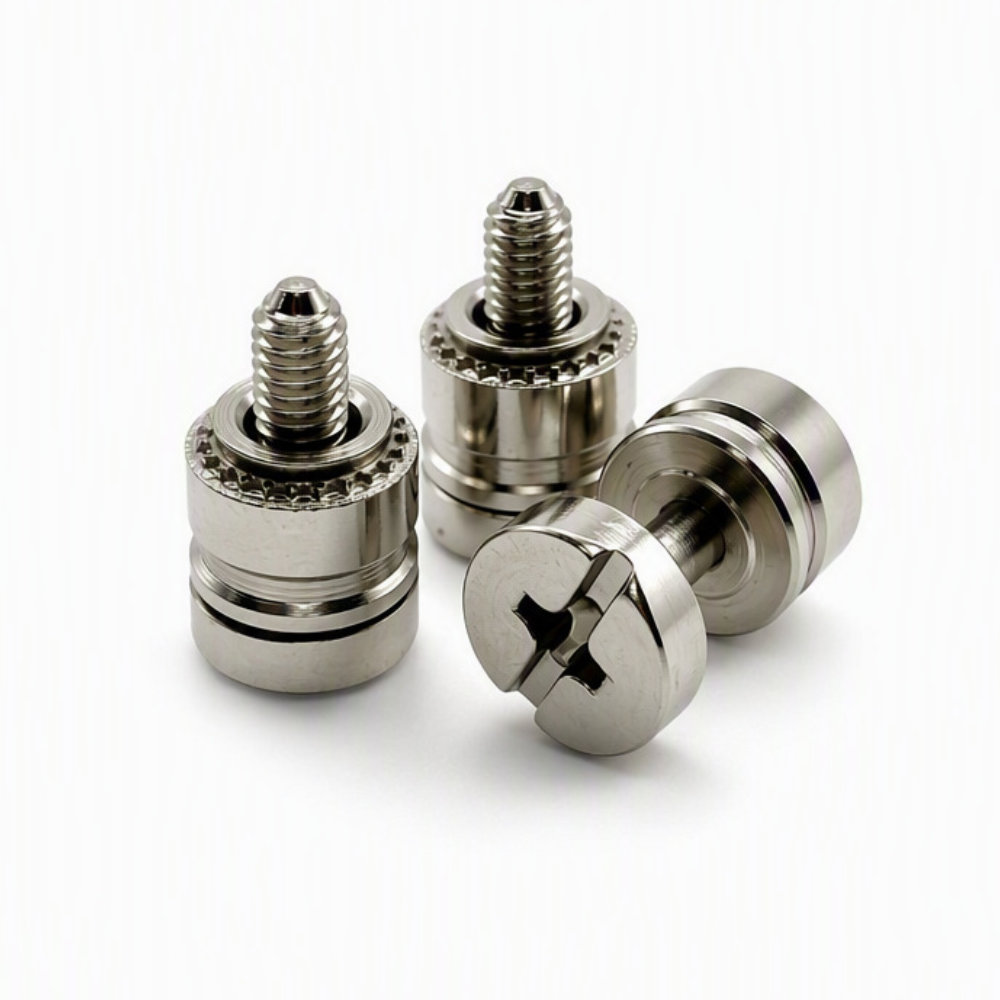
PFHV-M3-0 Captive Panel Screw with No Spring
- Part No : PFHV-M3-0
-
- Part Number: PFHV-M3-0
- Product Type: Self-clinching captive panel screw, no spring
- Thread: M3 × 0.5
- Screw Length Code: 0
- Minimum Sheet Thickness: 0.92 mm
- Mounting Hole: 5.5 mm
- Driver Size: #1
- Minimum Edge Distance: 5.8 mm
- Inquiry now
Detailed description
Compact captive fastening without a spring
The PFHV-M3-0 captive panel screw is a self-clinching panel fastener with an M3 × 0.5 thread and a compact combination-drive head. Its no-spring construction distinguishes it from spring-loaded captive screw assemblies. The screw remains associated with its retainer when loosened, reducing the need to handle a separate loose screw during panel access.
Use the full part number when specifying this standard fastener. The final 0 is the screw length code in the LAMBOOR catalog; it is not a 0 mm screw length. Selection should consider the mounting sheet, mating thread and space around the screw head together.
PFHV-M3-0 catalog specifications
| Parameter | Catalog value |
|---|---|
| Thread | M3 × 0.5 |
| Screw length code | 0 |
| A | 0.92 mm |
| Minimum sheet thickness | 0.92 mm |
| Mounting hole diameter | 5.5 mm |
| C, maximum | 5.49 mm |
| E | 6.95 ±0.25 mm |
| G | 5.55 ±0.64 mm |
| H | 2.03 ±0.13 mm |
| P | 0 ±0.64 mm |
| T1, nominal | 6.69 mm |
| T2, nominal | 11.25 mm |
| Driver size | #1 |
| Minimum hole-center-to-edge distance | 5.8 mm |
Source: LAMBOOR Standard Fasteners Catalog V0.1, printed page 13 (PDF page 18). Lettered dimensions follow the catalog drawing. The catalog identifies measured dimensions as reference values; the actual product governs.
Check the panel interface before ordering
Review the mounting-hole diameter, sheet thickness and hole-center-to-edge distance before releasing the panel drawing. Also check access for the driver and clearance in both fastened and released positions. A matching M3 thread alone does not establish assembly compatibility. Installation tooling and settings should be selected for the actual sheet and validated on the intended assembly.
Frequently asked questions
Will PFHV-M3-0 retract automatically when loosened?
Do not select it for spring-driven retraction: PFHV is the no-spring design. If automatic spring lift is part of the access-panel requirement, evaluate a spring-loaded model and verify its mounting dimensions separately.
Can PFHV-M3-1 replace the code 0 version?
Not solely because both use M3 threads. The catalog gives different G and P dimensions for the two length codes. Compare screw projection and the mating assembly before approving a substitution.
Does the listed hole diameter define a complete installation specification?
No. The panel drawing must also address sheet properties, edge distance and the installation process. Send the panel drawing with the exact part number so the complete interface can be reviewed.
Request a quotation
Send PFHV-M3-0, the required quantity, panel material and thickness, and any finish or inspection requirements. Include the mating-part drawing when engagement or access clearance is critical.